One of the most exciting moments during engagement is picking out a wedding band that speaks to you. While it’s important to keep a budget in mind for these matters, a happy bride will also want to keep in mind that this ring is supposed to be one she wears for the rest of her life — so it needs to be in a style she actively loves.
There are many different styles of diamonds, wedding bands and ways to craft a beautiful and significant wedding band — even if you spend most of your time wearing a silicone one as a replacement while you do yard work, for example.
When selecting a wedding ring, it’s crucial to find a style that resonates with your personal taste and stands the test of time. While budget considerations are important, prioritizing a design that you genuinely love is essential since it’s a piece of jewelry you’ll wear every day. Whether you opt for a pave or halo ring style, both offer their unique advantages and considerations, and it’s worth exploring the differences to make an informed decision. By understanding the pros and cons of each style and considering your preferences, you can choose a classic wedding ring that will continue to be cherished for years to come.
In this post, we will talk about pave vs. halo ring styles, their pros and cons and other frequently asked questions about wedding diamonds. Keep reading for all you need to know about choosing a classic wedding ring that will remain in style for decades!
What Is a Pavé Wedding Ring?
A French word meaning “paved,” a pavé wedding ring indicates the way the diamonds are inlaid in the band. For example, around the whole circle, tiny diamonds are inlaid (or “paved”) into the loop, all leading up to the main large diamond up top. They rose to popularity in the 1900s but still remain a common choice for brides to this day.
Pros of a Pavé Wedding Ring
While some people much prefer other kinds of wedding bands, a pavé wedding band does come with a certain element of luxury connoted to it. There are other reasons why one might want to choose this style of wedding ring as well, including:
- A high amount of sparkle and shine
- Impressive with lots of possibilities for variation
- A classic choice that isn’t likely to go out of style anytime soon
Cons of a Pavé Wedding Ring
However, the opulence of a pavé wedding band isn’t everyone’s cup of tea. Here are some common reasons why some brides choose anything but this relatively recent style of wedding ring:
- High maintenance and hard to clean
- Tend to cost more due to the number of diamonds and the labor involved
- Might be “too flashy” for some tastes and could even be looked at as “trendy”
What is a Halo Wedding Ring?

Halo wedding rings are sometimes confused with pavé rings because they also often include small diamonds embedded within the ring. However, while pavé diamonds are inlaid within the band itself, halo wedding rings rely on one large, central diamond with a series of pavé diamonds circling it in a decorative border. Halo wedding rings are a little bit older in design than the band-inlaid pavé wedding rings, as they gained popularity in the mid-1800s during the Victorian Era.
Pros of a Halo Wedding Ring
There are many reasons to love a halo wedding ring, including:
- The primary diamond appears bigger
- Simple and elegant band to support it (gold, rose gold, silver, etc.)
- Slightly simpler than pavé rings and offer an element of timeless elegance
- Easier to clean than pavé wedding bands
- Tend to be cheaper than pavé bands as there’s generally less labor involved
Cons of a Halo Wedding Ring
Halo wedding rings are not for everyone, however. Here are some of the cons associated with this type of wedding band and diamond inlay:
- Can be difficult to pair with an engagement band
- Still costs more than a solitaire wedding band
- Some might find the design too simple or old-fashioned
- Still requires regular maintenance and cleaning
Pavé vs. Halo Wedding Rings: Which One’s Best?
If you have already ruled out the simple solitaire design (one central diamond inlaid in a simple band, usually made of gold or silver) and are looking for a wedding ring that has a little more uniqueness in terms of design, you’re likely looking to choose between halo and pavé ring styles. Now that you know the appearance, history, pros and cons of each one, how do you decide which one is best? Here are some factors to consider when choosing a diamond band for your wedding.
1. Aesthetic:
Of course, you’ll want to pick a ring that you personally think is beautiful — and one that you’ll likely love for the years ahead. Consider choosing a ring you’d be happy to wear every day with any outfit.
2. Practicality:
Is your desired wedding ring too large and gaudy for comfort? Does it scratch your face, get caught on furniture or snag on your sweaters? Is it a wedding ring you could do dishes in, yard work, cook, shower, etc.? If you don’t think you can wear your wedding rings during daily life, it might be time to consider a different design.
3. Cost:
While cost is not everything, it is an important factor to consider. The more you spend on your wedding ring, the fewer dollars you will have to spend on the really fun stuff, such as venue, catering, number of guests, DJs, the honeymoon getaway, etc.
4. Maintenance:
How hard is your ring to clean? Will it need professional maintenance or cleaning? Keep in mind the more stones you have on your ring, the more potential for one of them to become knocked loose or go missing. As a general rule, the simpler your ring is, the easier maintenance, cleaning and repairs will be.
5. Timelessness:
Is your ring trendy? Will you find your tastes have changed in 20 years? Would it be a ring you’d be happy to hand down to your daughter, granddaughter or great-granddaughter in years to come? Finding a ring that is timeless means you can feel confident wearing it from the moment you put it on and beyond.
6. Compatibility with engagement band:
Does your ring lend itself well to adding an engagement ring too, if you’re in that part of the process? For that matter, does it welcome other jewelry or does it upstage or “clash” with other rings or jewelry you like to wear for fun?
Try to find a band that does not make such a loud statement so it plays nicely with other pieces of jewelry you may choose to wear from time to time — from necklaces to bracelets and other decorative rings.
7. Value:
This goes back to the timelessness of your ring; if the style of your ring could appeal to a bride three generations from now, that would be (by most measures) considered a “timeless” ring. This means that if you buy a ring today with this sort of aesthetic, you could potentially save your offspring or their children thousands of dollars while adding a significant amount of sentimental value by passing down the ring as an heirloom.
The longer you can hang onto a ring in your family, the more it is likely to be worth should you ever decide to sell it someday — provided it is still in good condition.
Do I Even Want a Diamond Wedding Ring?
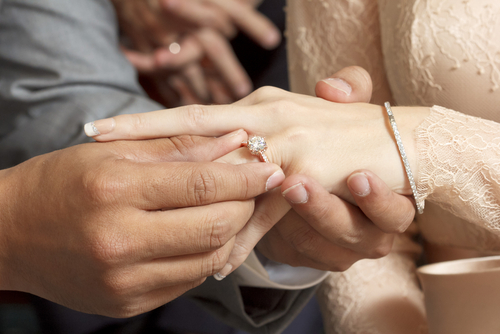
Diamonds are a classic choice for wedding bands for a number of reasons, not least of which is their significant price tag, indicating the worthiness of the bride and the groom’s willingness to provide them with good things. What’s more, diamonds have long symbolized purity, love, innocence and faithfulness — which many would argue are great values with which to adorn your wedding band.
However, not everyone opts for the traditional wedding ring, whether for personal, aesthetic or environmental reasons.
Also check out:
- What If My Engagement Ring Is Too Big (And 8 Best Ways to Fix It)
- How Much Does a Wedding Ring Cost?
- Details of Blake Lively’s Engagement Ring
Other Types of Stones Used Instead of Diamonds in a Wedding Band
If you feel like adding some color to your life and breaking from the tradition of a typical clear stone on your ring finger, the other most popular stones for weddings include emeralds, sapphires and rubies. These stones are also very durable and generally require about the same amount of maintenance as a diamond ring.
Emeralds are known to symbolize intelligence, foresight and royalty, whereas sapphires signify wisdom, kindness, royalty, divine favor and strength. Rubies, on the other hand, symbolize love and commitment and were even historically believed to promote good health and protect from misfortune. Another popular choice for a wedding band is opal; this is thought to conjure hope, purity, truth and even prophecy.
It’s important to note that because diamonds are so interconnected with our socialized idea of a wedding band, even if a bride does elect for a non-traditional sapphire wedding ring, oftentimes, they will add diamonds in a pavé style to encircle the blue stone. This adds an ingredient of nuptial significance while the main focus is still very much on the sapphire.
How to Guarantee My Wedding Diamond Is Ethical

As of 2021, most globally-exported diamonds were sourced in Russia — though before Russia, Botswana and Canada ranked next in line for the largest exporter of diamonds. While there are no guarantees in life, anywhere you have a valuable material or substance — whether that be electronics, precious stones or metals, there is always the potential for shady behavior and folks to “skim the fat,” so to speak, line their own pockets. This can have devastating consequences, such as seen in the movie “Blood Diamond.”
However, nowadays, it is unlikely you will have to worry too much about your diamond ring coming to you as the product of illicit behavior — in fact, there are many ways to certify that your specific diamond did not cause bloodshed or illegal activity. One easy way to guarantee this is by choosing a United States-made, lab-grown diamond.
An additional benefit of this is that lab-grown diamonds can also cost up to 50% less than naturally-sourced diamonds — and you’d be hard-pressed to notice a difference between the two with the naked eye.
A secondary option for those who insist on a natural diamond is researching a jeweler or provider who sources conflict-free or ethical diamonds — though there is a difference between the two. For example, conflict-free diamonds are guaranteed not to be used to fund any civil unrest or conflict, whereas ethical diamonds provide even more protection to ensure safe and ethical mining practices where fair pay and good work conditions for the employees are essential.
What Is the Kimberley Process?
You might be wondering how we can be sure that our engagement diamonds aren’t financing civil wars in other countries. Thanks to the Kimberley Process, which began in 2003, jewelers who source diamonds from foreign countries now have a regulated process by which to monitor diamonds “from mine to market” to ensure that there is no foul play or illegal behavior involved.
When it comes to picking your diamond engagement ring, many brides find that it is worth the peace of mind to ask if the jewelers’ diamonds are ethically sourced using the Kimberley Process. If this is hard to find, you can always turn to a United States-made, lab-grown diamond — though some people don’t find this idea as romantic as a naturally-sourced stone.
Pavé vs. Halo and Finding the Wedding Ring of Your Dreams
While pavé rings present an aesthetic influence in halo-style wedding rings, the two are distinct in a few major ways. Not least of all, pavé rings involve tiny diamonds embedded within the band itself, whereas halo rings sport a ring of small diamonds around the primary diamond with a plain metal band.
Pavé rings are also harder to clean, more expensive at the onset and more challenging to repair should a diamond come loose. That being said, their unique luster provides an appeal that many brides cherish — and they are a more modern design than the halo.
Now that you know the primary differences between ways to lay stones in your wedding ring, now you have to choose — will you go with a classic diamond for your nuptial vows, à la Kimberley Process? Will you opt for a cheaper, more ethical, American-made diamond grown in a lab? Or will you embrace other stones like sapphire, emerald, ruby or some other precious stone?
Whatever you decide, remember to ask your jeweler how to best care for your wedding ring — from regular cleaning to any maintenance packages they may offer.
Top 10 Best Engagement Rings For Gay Guys
15 Awesome Hers and Hers Gifts for Your Favorite Couple
The History of Moissanite & Why it's a Great Engagement Ring Option
20 Creative Ideas for Fun Engagement Photos
9 Stunning LGBTQ Celebrity Engagement Rings We're Drooling Over
They Took Their Engagement Pics in a Barn -What Happened Next Was Unexpectedly Beautiful

Serena & Dominic are a married couple and parents to 3 wonderful children. They plan weddings, run multiple small businesses, and curate wedding events.
By giving you everything you need to make your dream wedding attainable, you can eliminate stress, get the ‘wedding glow,’ and focus on spending this rocking day with the person you adore. Discover their podcast for more information